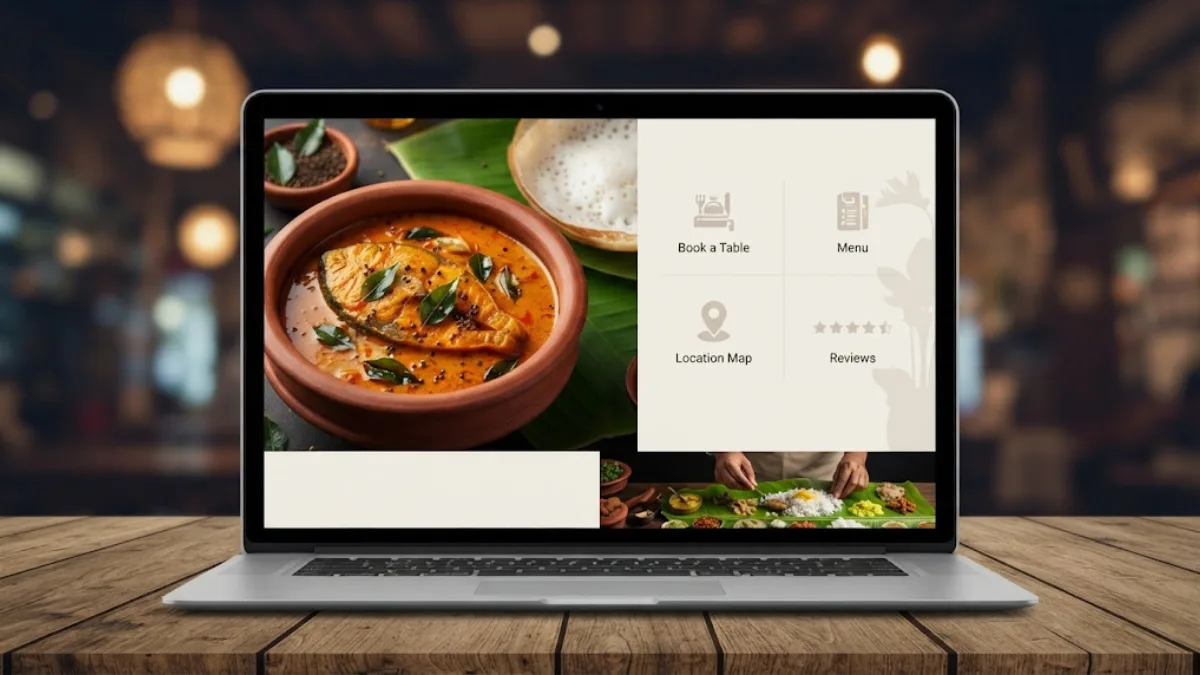
Quick answer: A restaurant needs its own website because it is the only online space you fully control. It helps new customers find you on Google, lets regular guests order or book directly without paying heavy app commissions, and builds trust before anyone walks through your door. Social media and delivery apps can support your business, but a website is the foundation.
Why Every Restaurant in Kerala Needs a Website
Introduction
Picture this. A family visiting Kochi searches “best seafood restaurant near me” on their phone. They see three options. One has a clear website with photos, a menu, opening hours, and a “Call Now” button. One has only a delivery app listing. One has an Instagram page that hasn’t been updated in months.
Which one do they choose?
Kerala’s food culture is one of the richest in India, from Malabar biryani and Kuttanad karimeen to Thrissur sadya and Kozhikode halwa. But great food alone no longer guarantees full tables. Customers now decide before they arrive, and most of that decision happens online.
This beginner-friendly guide covers the key reasons why every restaurant needs a website, in plain language, whether you run a small tea shop in Malappuram or a multi-branch restaurant in Thiruvananthapuram.
1. Customers Search Online Before They Eat Out
Today, hungry customers open Google, not a phone book. They search “family restaurant in Kozhikode,” “vegetarian meals near me,” or “best biryani in Thalassery.”
If your restaurant has no website, you risk being invisible at the exact moment someone is ready to spend money. A website gives search engines a clear, trustworthy source of information about your business: your location, cuisine, prices, and hours. That makes it far easier for you to appear in search results and map listings.
2. Your Website Is Your Digital First Impression
Before tasting your food, people judge your restaurant by how it looks online. A clean website with real photos of your dishes, a readable menu, and honest details signals professionalism and hygiene.
This matters even more in Kerala’s tourism belt. Visitors from other states and countries rely heavily on online research. A well-built site tells them you are established and worth their time.
3. Stop Losing Money to Delivery App Commissions
Food delivery platforms bring orders, but they also take a large cut. Commission rates are commonly cited in the range of 20% to 30% per order, and that can wipe out your profit on low-margin dishes.
There is another problem. On those apps, the customer belongs to the platform, not to you. You rarely get their contact details, and your restaurant sits beside dozens of competitors, often with discounts pushing prices down.
A website with direct ordering, even a simple WhatsApp order button or a call-to-order option, lets you keep more of every sale. You don’t need to leave delivery apps entirely. Use them for discovery, and gently guide repeat customers to order directly from you.
4. Own Your Customer Relationships
Social media followers and app users are “rented” audiences. If an algorithm changes or an account gets restricted, that reach can vanish overnight.
A website lets you collect real assets: phone numbers, email addresses, and booking details, with consent. With them you can:
- Announce a new Onam or Ramadan special
- Send festival offers directly
- Invite regular guests to events or tastings
- Bring back customers who haven’t visited in a while
Owning this data turns one-time visitors into loyal regulars.
5. Accept Table Reservations and Bulk Orders Easily
Many Kerala restaurants depend on more than walk-ins. Family gatherings, wedding-season dinners, office parties, and tour groups all need advance planning.
Without a website, these bookings often arrive through scattered phone calls and missed messages, and mistakes cost you money. A simple booking or enquiry form collects the date, guest count, and requirements in one organized place, so your team can respond quickly and professionally.
6. Local Search Visibility (Google Maps and "Near Me")
Most restaurant discovery is local. When someone searches “restaurants near me,” Google looks at signals like your Google Business Profile, reviews, and website.
A website strengthens those signals. When your site clearly states your address, phone number, cuisine type, and service areas, and matches your Google listing, search engines trust your information more. You can also add:
- An embedded Google Map
- Customer reviews and testimonials
- Nearby landmarks and parking details
- Pages for each branch, if you have several
7. Answer Customer Questions Before They Ask
Every restaurant gets the same questions again and again:
- What time do you open?
- Do you have vegetarian or halal options?
- Is there parking?
- Do you take UPI or cards?
- Can I book a table for 20 people?
Your website answers these 24/7, freeing your staff to focus on service. It also matters for modern search. AI assistants and voice search increasingly pull direct answers from websites, so clear, well-organized information helps your restaurant get mentioned when customers ask questions like “Which restaurants in Kochi serve authentic Kerala meals?”
8. Build Trust and Credibility
A website acts like a digital shopfront that never closes. It lets you show:
- Your story, your chefs, and your kitchen values
- Food safety and hygiene certifications
- Genuine customer reviews
- Awards, press mentions, and years in business
Trust is powerful in the food business. A guest who feels confident about your restaurant is more likely to book a table, order for a large gathering, or recommend you to friends.
9. Reach NRIs, Tourists, and Global Visitors
Kerala has a huge community of people living abroad, and many of them love recommending or searching for authentic home-style food when they visit. Tourists exploring backwaters, hill stations, and beaches also research meals online first.
A mobile-friendly website, ideally with English and Malayalam options, lets you welcome visitors from anywhere. It also helps if you offer catering, packaged food, or party orders that go beyond your local area.
10. Lower Marketing Costs Over Time
Paid ads stop working the moment you stop paying. A website works differently: every helpful page, photo, and blog post you publish keeps attracting visitors long after it goes live.
Over time, a well-maintained website can lower your cost of getting each new customer. Compared with repeated discounts or constant ad spending, it is one of the most sustainable marketing investments a restaurant can make.
11. Stay Ahead of Competitors
Here is the uncomfortable truth: if your competitor across the road has a fast, attractive website and you don’t, they are quietly winning customers you never see. The reverse is also true. In many small towns in Kerala, a good website can set you apart from every other restaurant nearby.
What Should a Good Restaurant Website Include?
You don’t need something complicated. Start with these essentials:
- Mobile-friendly design. Most visitors will open your site on a phone.
- Fast loading speed. Slow sites lose customers within seconds.
- Clear menu with prices, ideally in text, not just a PDF or image.
- Real, high-quality food photos.
- Contact details and click-to-call button.
- Location map and opening hours.
- Online ordering or reservation option.
- Customer reviews and testimonials.
- Links to Google Business Profile and social media.
- Basic security (HTTPS) so guests feel safe sharing details.
Common Mistakes to Avoid
- Uploading the menu only as a photo. Search engines can’t read it, and it’s hard to view on phones.
- Outdated information. Wrong timings or old prices frustrate guests.
- Using stock photos. Real dishes build more trust.
- Ignoring mobile users. A site that looks broken on a phone will lose most visitors.
- Building once and forgetting. Update your site regularly with new dishes, offers, and events.
How to Get Started
If you’re new to this, follow these simple steps:
- Decide your main goal: more walk-ins, direct orders, or reservations.
- Collect good photos, your menu, and your restaurant story.
- Choose a reliable local partner. A trusted web developer in Kerala understands local customer habits, regional languages, and the seasonal patterns of the food business.
- Look for a team offering a custom website design service in Kerala rather than a one-size-fits-all template, so your site reflects your brand, cuisine, and personality.
- Set up your Google Business Profile and connect it to your website.
- Launch, collect reviews, and keep improving.
Ready to Put Your Restaurant on the Digital Map?
Your dishes deserve more than word-of-mouth. Whether you want online ordering, table bookings, or simply a beautiful home for your menu, the right website can turn searchers into seated guests.
Take the first step today: list your menu, gather your best food photos, and talk to a website expert who understands the Kerala restaurant market. Your next hundred customers are searching right now. Make sure they find you.
Frequently Asked Questions
Why does a restaurant need a website when it already has social media?
Social media is great for engagement, but you don’t control it. A website is your own space for your menu, bookings, and contact details, and it’s easier for Google to index. The two work best together.
Can a website really reduce dependence on food delivery apps?
Yes. With direct ordering or WhatsApp ordering, repeat customers can buy from you without paying platform commissions. Many restaurants keep apps for discovery and use their website for loyal customers.
Is a website useful for a small restaurant or tea shop?
Absolutely. Even a simple one-page site with your menu, location, photos, and phone number helps customers find and trust you, especially on Google Maps searches.
How much does a restaurant website cost in India?
Costs vary widely depending on features. A basic informational site is generally far cheaper than a full online-ordering platform. Ask for a clear quote covering design, hosting, domain, and ongoing support before you commit.
How long does it take to build a restaurant website?
A simple site can often be ready within a couple of weeks. More advanced sites with ordering or reservation systems take longer, depending on content and integrations.
Does a website help with Google Maps ranking?
It helps. Google compares information across your website and Business Profile. Consistent name, address, phone number, and up-to-date content build trust and support local visibility.
What is the most important page on a restaurant website?
For most restaurants, it’s the menu page, followed closely by contact and location. Guests want quick answers on what you serve, what it costs, and how to reach you.
Do I need a website in Malayalam as well as English?
It’s not mandatory, but a bilingual site can help you connect with local customers while still serving tourists and NRIs. It depends on your audience.
How often should I update my restaurant website?
Review it at least monthly. Update prices, timings, festival specials, and photos so guests always see accurate information.
Final Thoughts
The reasons why every restaurant needs a website come down to one idea: control. Control over how customers find you, how they see you, how they order, and how you stay in touch afterward. In a competitive market like Kerala’s, where good food is everywhere, the restaurants that grow are the ones easy to find, easy to trust, and easy to order from.